
On Idleness
With the help of Coleridge, Wordsworth, Weil, and Rilke

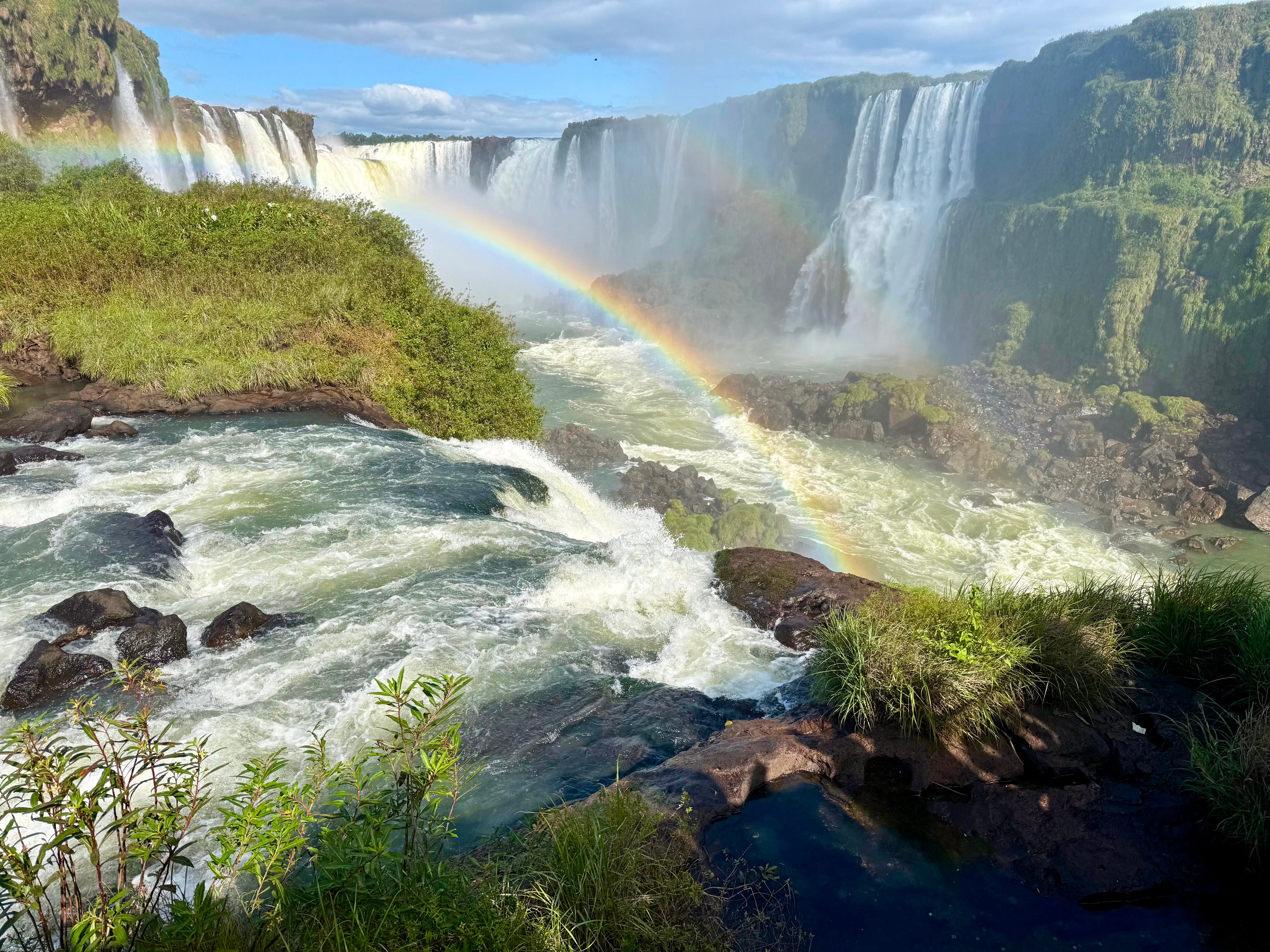
On a Thursday in April, in the fraught middle of ubiquitous quotidian frenzy and banality, I went outside for sunset with the Lyrical Ballads in-hand. I had read “Goody Blake and Harry Gill” the day before, so “Lines” was up next. Since then, I have thought about this poem almost every day.
Between reading, researching, writing, editing, cooking, cleaning, working, etc. etc. there’s always something to be done––which, personally, I enjoy. I know it’s perhaps the internalized capitalistic drive within me, but I enjoy doing things, having done them, feeling the satisfaction of completion. A reality one must always face, however, is that there will always be something else to be done; time is always passing, things are always changing. That the only constant is that.
Why I choose the classification of capitalist arises from the metaphor we use to speak of time: money. We say we don’t want to waste our time, we want to consider how to spend our time. We say, plainly, that time is money. There is no metaphor here, we literally equivocate time with money. Our language then shows us that time is our most valuable resource next to literal currency. It follows that both time and money are depletable, and they can be used in right and wrong ways. At each moment of the day, we have the potential to change something, actualize something, by doing or not doing. At each moment, we have the potential to alter the course of our days, and if our days are our lives, then in sum, the course of our lives.
Because we treat time as money, we also feel the burden of when there’s not enough––an uncomfortable squeeze like an old pair of pants you were sure would fit but, now sweating slightly after negotiating your thighs into them, are no longer so sure. In pants-terms, that squeeze signals a dissonance between the real and imagined realms of possibilities, and perhaps that it is once again time to go shopping, or running. In time-terms, that squeeze is called stress. It is the mental pinch, the caught breath, at the realization that there are all these things to do and not all the time in which to do them before they have to be done. We feel compressed by the not-enough-time the same way we do the jeans. And we want to rid ourselves of them. Stress is the antithesis to joy––it is the compression rather than the expansion of self over the planes of existence. (the former two paragraphs have been adapted into this essay from my newsletter on leap day).
I was feeling exceedingly compressed in the moments before I read “Lines.” The poem goes like this:
It is the first mild day of March:
Each minute sweeter than before
The red-breast sings from the tall larch
That stands beside our door.
_
There is a blessing in the air,
Which seems a sense of joy to yield
To the bare trees, and mountains bare,
And grass in the green field.
_
My Sister! (’Tis a wish of mine)
Now that our morning meal is done,
Make haste, your morning task resign;
Come forth and feel the sun.
_
Edward will come with you, and pray,
Put on with speed your woodland dress,
And bring no book, for this one day,
We’ll give to idleness.
_
No joyless forms shall regular
Our living Calendar:
We from to-day, my friend, will date
The opening of the year.
_
Love, now from a universal birth,
From heart to heart is stealing,
From earth to man, from man to earth,
––It is the hour of feeling.
_
One moment now may give us more
Than fifty years of reason;
Our minds shall drink at every pore
The spirit of the season.
_
Some silent laws our hearts may make,
Which they shall long obey;
We for the year to come may take
Our temper from to-day.
_
And from the blessed poet that rolls
About, below, above;
We’ll frame the measure of our souls,
They shall be tuned to love.
_
Then come, my sister! come, I pray,
With speed put on your woodland dress,
And bring no book; for this one day
We’ll give to idleness.
(had to throw in that little dash between stanzas because substack is being weird and not allowing the correct formatting)
Those last two lines (also repeated in the fourth stanza), “And bring no book; for this one day / We’ll give to idleness” astonished me. Not even bring a book?
Obviously, there are different experiences of reading, some lying in the camp of pleasure, and others in challenge, and others in education––and it’s all part of a venn diagram of reading, surely. I enjoy reading complex books even though sometimes I really don’t enjoy reading them (haunting me are the pages upon pages of Eschaton explanation in Infinite Jest or the encyclopedic entries of Moby Dick). And I enjoy reading for pleasure.
And as I reflected on those lines, I realized that even in moments of leisure, I find myself doing something. When at the beach or the park or in the car or plane or… well, wherever really, I read. When I watch television with my partner I crochet or knit––although not when we watch movies or something to which I wish to devote my full attention. Those instances of leisure cannot be categorized as the same ilk of idleness discussed by Coleridge and Wordsworth in “Lines,” however. They’re discussing an idleness with no external input besides being in nature, to feel the blessing in the air. I love spending time outside: hiking, sunbathing, snowboarding, walking, biking. I spent a month camping in the national parks and realized that I lived outside because the only inside was my car, and how strange a feeling that was. But, still, the doesn’t feel like I am or was not-doing enough to find myself in an analogous situation to the poets.
To give one whole day, a whole 24 hours––or however many of those one is awake––to just being there: I’m not sure that’s something I’ve never done in my adult life. As a child, yes. But since reading became a part of my life, I’ve always had a book with me in case of lack of meaningful interaction with the world (I brought a book to my junior and senior high school proms). I do think I would be able to do it. I don’t think I would like it, though. I try to meditate every day, and often before I set my timer, the thought appears in my mind that perhaps I could use these next 20 or 30 minutes to read, to catch up on some work, and realize that that is the exact opposite of what I need to be doing. Because while that work and productivity is related to creativity and activities I inherently enjoy and thereby feels pleasurable, just being should, too. I try to remind myself that I shouldn’t believe all the thoughts that come into my head.
I have a friend doing her Ph.D. in biology in Santa Cruz. She’s wonderfully and impressively knowledgeable about all kinds of flora. When we visited her, she took us to the redwood grove near her house. And as we walked along the path, she pointed to different trees and sprouts and flowers and explained what they were and their taxonomies. I found it fascinating because that connection, that knowledge about the green world at her fingertips, at my fingertips and the soles of our shoes, is so far beyond my realms of knowledge. My mental orchards are pollinated by the fruits of the minds of others, writers, poets, philosophers.
As she told us about the prehistoric awesomeness of Ginkgo trees, I realized that the way she analyzed the overstory resembles the way I analyze a poem or a passage. Then I thought about the line: “One moment now may give us more / Than fifty years of reason; / Our minds shall drink at every pore / The spirit of the season.” Of course, that’s the Romantic sensibility speaking through there, finding wisdom and guidance in Nature, which of course requires being in nature, allowing it to be within you as you are within it.
It reminds of Simone Weil’s beliefs about how “attention, taken to its highest degree, is the same thing as prayer. It presupposes faith and love. Absolutely unmixed attention is prayer. If we turn our mind toward the good, it is impossible that little by little the whole soul will not be attracted thereto in spite of itself.”
Is nature or Nature the good? I’m not sure I really want to go into that discussion of morality and fallacy, but I think that focusing on the external world by just being is inherently not-bad. Rilke certainly believed that we can gain profound spiritual and personal wisdom from nature, by observing nature and surrendering to its intelligence.
“If you hold close to nature, to what is simple in it, to the small things people hardly see and which all of a sudden can become great and immeasurable; if you have this love for what is slight, and quite unassumingly, as a servant, seek to win the confidence of what seems poor – then everything will grow easier, more unified and somehow more conciliatory, not perhaps in the intellect, which, amazed, remains a step behind, but in your deepest consciousness, watchfulness and knowledge.”
And I think that in our modern world where all things pull our attention towards fragmentation rather than unification and the online ‘go touch grass’ admonishment acknowledges the opposing forces of the pull towards depersonalization from our online worlds and the pull towards a feeling of grounding afforded by, well, the ground––specifically the ground outside, in nature.
Perhaps I should take one day, of all the days of my life, spend it outside, in idleness. Perhaps you, reader, should, too.
“My mental orchards are pollinated by the fruits of the minds of others, writers, poets, philosophers.”
What a wonderful quote. Thanks for this essay.
It was a really fun read. It's a question I've thought of myself a lot. But it's difficult to know what being "idle" means in practice. The closest thing I know to this is pure attention given to nothing (i.e everything) in particular: to walk without an aim taking in everything that your senses give you (really loved the Simone Weil quote).